 Zinvana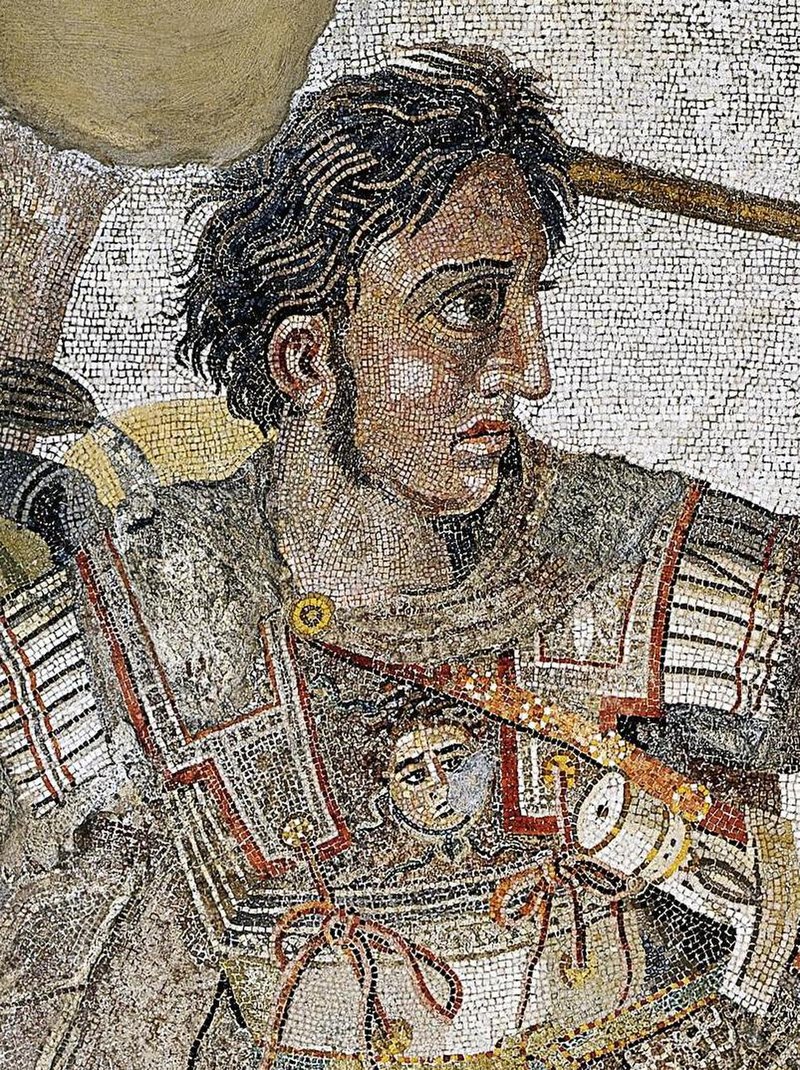
If you got Alexander, you don't think in promotions. You think in horizons. The job in front of you is interesting only as long as it's not finished. The minute it stops being a problem you're already looking at the next one. People around you find this exciting, exhausting, or both.
Alexander III of Macedon inherited his father's army at twenty and was dead at thirty-two, having marched it from Greece to the Punjab without losing a single major battle. He did this not because he was the best general who'd ever lived (he was, but that wasn't the point) — he did it because he genuinely could not stop. Stopping felt to him like dying. When his troops finally refused to march any further, on the banks of the Hyphasis river in India, he sulked in his tent for three days.
That, in compressed form, is your archetype.
What this result actually means
You answered the quiz in a pattern that maps to four traits Alexander had in extreme form: vision, nerve, impatience, and a kind of romantic stubbornness. You're more comfortable with risk than most people. You're more likely to leave a stable situation early than late. You probably get on well with people who challenge you and badly with people who outrank you for the wrong reasons.
None of this is a compliment by itself. Visionary Conqueror is the highest-upside and highest-downside leader archetype in the quiz. It's the most likely to start something genuinely new. It's also the most likely to burn out, alienate the people who got it there, and never enjoy the win.
Where you're at your best
- Starting things from zero. You're the person who'll take the empty room and the bad idea and turn them into something worth having. Most people freeze at the start. You don't.
- Convincing people to follow you somewhere uncomfortable. Alexander's army marched 11,000 miles for him. Yours probably won't, but the principle is the same — you sell the picture, not the plan.
- Making decisions with incomplete information. You don't need to know the answer; you need to know enough to act. That's a leader's job, and most people can't do it.
- Adopting from the people you beat. Alexander dressed Persian, married Persian, and put Persians in his bureaucracy after he conquered them. You're better than most people at admitting your enemy had something worth keeping.
Where you're at your worst
- Finishing. The unglamorous middle 60% of any project bores you to death. You'll start three things and complete one if you're lucky.
- Choosing successors. Alexander left no plan for what came after him. His empire fragmented within ten years. You probably haven't thought about what happens when you leave the job either.
- Listening to people who tell you to slow down. They're often right. You will not believe this until something burns down.
- Stopping. Restlessness is a feature until it isn't. Watch for the moment ambition becomes inability to sit still.
The thing nobody tells Visionary Conquerors
The version of you that wins is the version that learns, around 35, that "what's next" is not always the right question. Sometimes the right question is "what does this need from me to actually finish?" Alexander never asked it. The Caesars and Augustuses who came later did, and that's why they died in their beds and he died of fever in Babylon at 32.
Other people who scored your archetype
The quiz has been taken about 480,000 times. The Visionary Conqueror result tends to come back for people whose answers also resemble:
- Napoleon Bonaparte — the corsican outsider who couldn't stop expanding
- Julius Caesar — the politician who turned himself into a god
- Simón Bolívar — the romantic who liberated half a continent and died disillusioned
- Mustafa Kemal Atatürk — the only Visionary Conqueror in this list who actually built institutions that outlived him
If you want to actually use this result
The honest reading is that you have one of the rarer leader profiles, and the people who do best with this profile are the ones who learn to slow down before circumstances slow them down. If you do nothing else with this quiz, do these three things:
- Pick one project and finish it before starting the next. Pick a small one. Resist the urge to expand the scope. Notice how uncomfortable that is.
- Identify your second-in-command. The person who'd run things if you got hit by a bus tomorrow. If you can't name one, you have a problem Alexander also had.
- Find one mentor older than you who's earned the right to tell you no. Alexander had Aristotle until he was sixteen. After that he had nobody. Don't repeat the pattern.
Want to learn more about Alexander himself, not just the archetype? Read our full biography — the man behind the result, told without the school-textbook gloss.