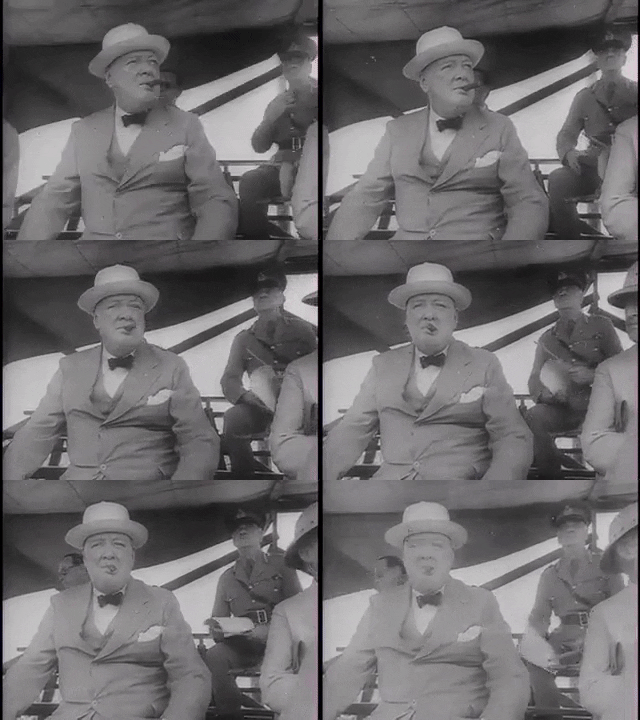
Primer: Why Winston Still Matters
Churchill archetypes surface in volatility. You absorb fear, speak boldly, and become the emotional thermostat when stakes feel existential. Downtime bores you; challenge energizes you. This Q&A brief distills biography, operating system, and modern applications so readers can deploy the archetype with confidence.
Core Pillars
- Animates purpose with memorable storytelling
- Absorbs fear and converts it to collective courage
- Makes rapid decisions when conditions change hourly
- Builds coalitions of unlikely allies
Watchouts
- Intensity can exhaust calmer teammates
- Blunt feedback may bruise relationships
- Prone to restless energy between crises
- Requires disciplined operators to sustain execution
Leadership Snapshot
Churchill served as Britain's emotional thermostat—grim when necessary, defiant when morale risked collapse.
- Born: 1874 — Blenheim Palace
- Died: 1965 — London
- Office: Prime Minister 1940-45, 1951-55
- Specialty: Crisis rhetoric plus relentless tasking
Deployment Zones
Use the Winston archetype when you need:
- Crisis leadership
- public affairs
- media strategy
- transformation programs
- defense and security
Signature Timeline & Campaign Pulse
Five anchor moments that prove why Winston Churchill still trends in boardroom decks.
- Warns about Nazi rearmament; returns to Admiralty.
- Becomes PM, forms coalition cabinet as France collapses.
- 'Never was so much owed.' speech as RAF holds the line in the Battle of Britain.
- Signs the Atlantic Charter with FDR, setting Allied principles.
- V-E Day celebrations followed by electoral defeat; democracy remains intact.
Battlefield-to-Bureaucracy Playbook
Stack these cards into strategy briefs, leadership workshops, or culture resets.
Campaign Stack
- Animates purpose with memorable storytelling
- Absorbs fear and converts it to collective courage
- Makes rapid decisions when conditions change hourly
Coalition Stack
- Builds coalitions of unlikely allies
- Balances tradition with innovation under fire
Stability Stack
- Counter-risk: Intensity can exhaust calmer teammates
- Counter-risk: Blunt feedback may bruise relationships
- Counter-risk: Prone to restless energy between crises
Their Finest Hour Broadcast
June 1940 speech prepped the public for a long war. Churchill laid out facts (Dunkirk losses) before pivoting to defiance, so optimism felt earned.
Leaders can borrow the format: acknowledge data, name the hard road, then describe the role each listener must play.
Let us therefore brace ourselves to our duties. if the British Empire and its Commonwealth last for a thousand years, men will still say, 'This was their finest hour.'
— House of Commons, 18 June 1940
Comparative Scorecard
Benchmark Winston against an operator (Augustus) and a reconciler (Nelson Mandela) to anchor strategic debates.
| Signal | Winston Churchill | Augustus | Nelson Mandela |
|---|---|---|---|
| Signature Play | Absorbs national fear, reframes it as determination, and keeps Parliament aligned via oratory. | Turns civil turmoil into lasting institutions and codified incentives. | Uses reconciliation and moral authority to reset the rules of engagement. |
| Coalition Style | Shares power with Labour and Liberal figures, proving unity is more persuasive than slogans. | Stitches elites, army, and provinces through calibrated power-sharing and ritual. | Centers empathy, ritual, and accountability to unite rivals. |
| Risk Trigger | Restless energy and blunt critiques can alienate peacetime partners. | Can drift toward caution, requiring fresh catalysts to avoid stagnation. | Patience can frustrate urgent reformers and invite bad actors if guardrails slip. |
| Cultural Legacy | Celebrates ordinary heroism (ARP wardens, pilots, clerks) to keep morale distributed. | Builds civic religion, infrastructure, and law to keep Rome cohesive. | Models forgiveness, civic dignity, and inclusive nation-building. |
| Modern Takeaway | In crisis, talk straight, assign duties, and keep a personal cadence of gratitude and urgency. | Systems outlive charisma when you reward compliance and deliver calm. | Lead with dignity but protect your own stamina and safety nets. |
Research Toolkit & Further Reading
Blend primary sources, documentaries, and Zinvana explainers for instant topical authority.
-
Biography
Churchill: Walking with Destiny — Andrew Roberts
Sweeping study anchored in newly available diaries.
-
Hansard
UK Parliamentary Debates
Primary transcripts of wartime speeches.
-
Archive
BBC War Reports
Audio clips for presentations or podcasts.
-
Film
Darkest Hour (2017)
Dramatization useful for workshops on communication under stress.
-
Guide
Zinvana: Churchill Profile
Pair with quiz outputs to coach crisis leadership.
In-Depth Q&A – Ten Expert Answers
Tap a topic to expand; each badge tells you which strategic lane you are exploring.
What early conditions shaped Winston Churchill's leadership instincts? Origins
Churchill archetypes surface in volatility. You absorb fear, speak boldly, and become the emotional thermostat when stakes feel existential. Downtime bores you; challenge energizes you.
How does Winston Churchill keep momentum without losing control? Strategy
Animates purpose with memorable storytelling Absorbs fear and converts it to collective courage Makes rapid decisions when conditions change hourly
What systems make Winston Churchill's leadership sustainable? Systems
Crisis leadership, public affairs, media strategy, transformation programs, defense and security
How does Winston Churchill hold coalitions together? Allies
You need partners who ground you during calm periods and navigate emotional swings with humor and honesty.
Where can Winston Churchill's style backfire and how do you counter it? Watchouts
Intensity can exhaust calmer teammates Blunt feedback may bruise relationships Prone to restless energy between crises
What tactics from Winston Churchill translate into modern innovation work? Playbook
June 1940 speech prepped the public for a long war. Churchill laid out facts (Dunkirk losses) before pivoting to defiance, so optimism felt earned.
How does Winston Churchill manage morale and narrative? People
Leaders can borrow the format: acknowledge data, name the hard road, then describe the role each listener must play.
Where does Winston Churchill's archetype create outsized results today? Today
Crisis leadership, public affairs, media strategy, transformation programs, defense and security
What myths about Winston Churchill should modern readers drop? Reality
You rally teams in crisis with defiant optimism and vivid language.
What is the immediate leadership lesson from Winston Churchill? Action
Practice listening during stability. Celebrate small wins, not just dramatic battles, and keep a recovery plan for your own resilience.