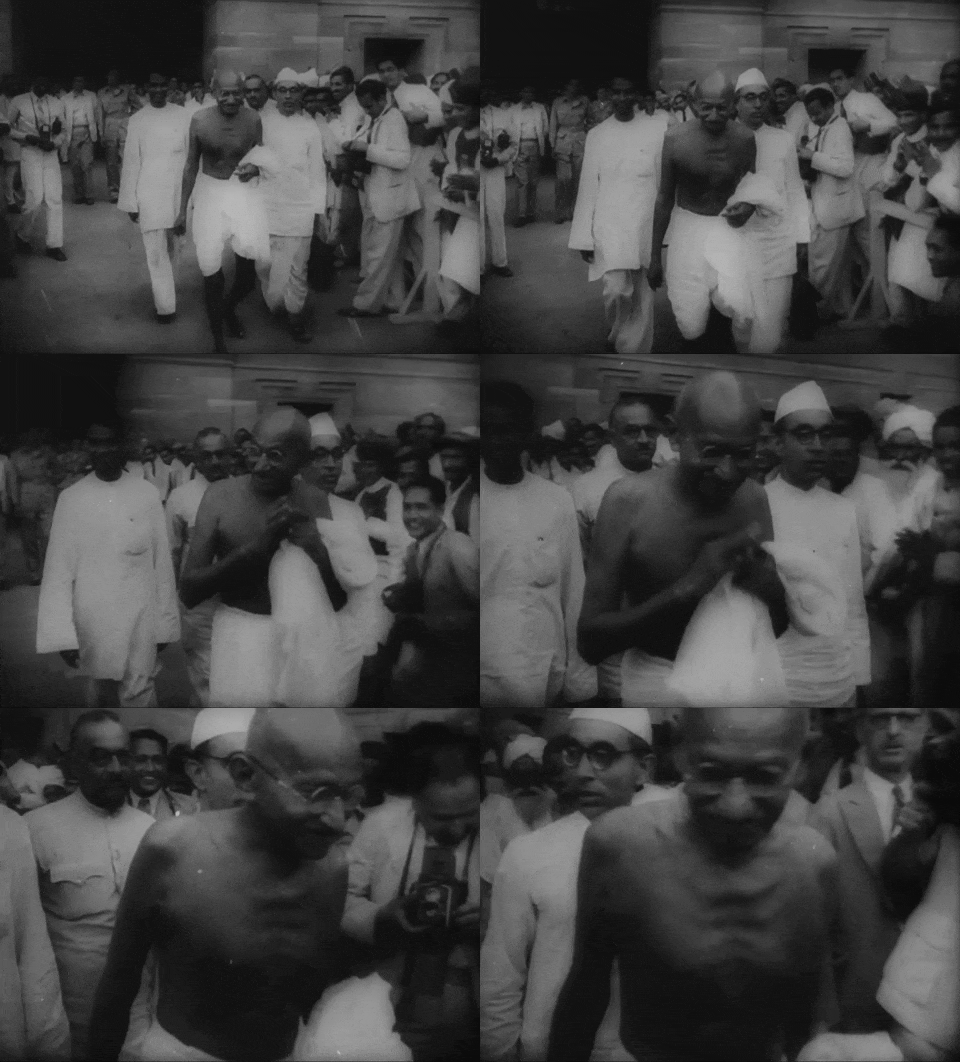
Primer: Why Mahatma Still Matters
Gandhi archetypes use discipline, symbolism, and collective action to erode injustice without replicating violence. You hold steady under provocation, reminding everyone that means and ends must align. This Q&A brief distills biography, operating system, and modern applications so readers can deploy the archetype with confidence.
Core Pillars
- Transforms values into consistent daily practice
- Mobilizes communities around ethical clarity
- Stays composed under provocation
- Uses storytelling and ritual to maintain momentum
Watchouts
- Slow methods frustrate fast-moving peers
- Self-denial can distance you from collaborators
- May underestimate those who ignore rules
- Intolerance for compromise can stall progress
Leadership Snapshot
Gandhi proved that disciplined restraint plus storycraft can grind empires down without firing a shot.
- Born: 1869 — Porbandar, India
- Died: 1948 — New Delhi
- Notable text: Hind Swaraj (1909)
- Specialty: Mass mobilization through satyagraha
Deployment Zones
Use the Mahatma archetype when you need:
- Peacebuilding
- social movements
- ethics and compliance
- sustainable business
- mindful leadership coaching
Signature Timeline & Campaign Pulse
Five anchor moments that prove why Mahatma Gandhi still trends in boardroom decks.
- Faces rail segregation in South Africa, sparking his philosophy of nonviolent protest.
- Launches first satyagraha in Johannesburg against the Asiatic Registration Act.
- Returns to India, builds Sabarmati Ashram as a leadership lab.
- Salt March ignites civil disobedience; British jails tens of thousands yet cannot stem headlines.
- Fast-tracks peace committees during Partition and is assassinated while promoting pluralism.
Battlefield-to-Bureaucracy Playbook
Stack these cards into strategy briefs, leadership workshops, or culture resets.
Campaign Stack
- Transforms values into consistent daily practice
- Mobilizes communities around ethical clarity
- Stays composed under provocation
Coalition Stack
- Uses storytelling and ritual to maintain momentum
- Aligns tactics tightly with purpose
Stability Stack
- Counter-risk: Slow methods frustrate fast-moving peers
- Counter-risk: Self-denial can distance you from collaborators
- Counter-risk: May underestimate those who ignore rules
Salt March Deployment
Gandhi selected salt—an everyday commodity—as the wedge issue. Volunteers rehearsed arrests, journalists were briefed, and international allies received nightly telegrams.
The lesson: choose a simple symbol, choreograph optics, and publish your rules of engagement so opponents who break them look reckless.
In a gentle way, you can shake the world.
— Gandhi, Young India, 1925
Comparative Scorecard
Benchmark Mahatma against an operator (Augustus) and a reconciler (Nelson Mandela) to anchor strategic debates.
| Signal | Mahatma Gandhi | Augustus | Nelson Mandela |
|---|---|---|---|
| Signature Play | Turns personal discipline and ritual into levers that shame empires into negotiation. | Turns civil turmoil into lasting institutions and codified incentives. | Uses reconciliation and moral authority to reset the rules of engagement. |
| Coalition Style | Builds broad alliances via ashrams, spinning wheels, and multilingual newsletters. | Stitches elites, army, and provinces through calibrated power-sharing and ritual. | Centers empathy, ritual, and accountability to unite rivals. |
| Risk Trigger | Absolute moral frames can alienate pragmatists and slow urgent change. | Can drift toward caution, requiring fresh catalysts to avoid stagnation. | Patience can frustrate urgent reformers and invite bad actors if guardrails slip. |
| Cultural Legacy | Links spirituality with supply chains (khadi, salt, sanitation) so values feel tangible. | Builds civic religion, infrastructure, and law to keep Rome cohesive. | Models forgiveness, civic dignity, and inclusive nation-building. |
| Modern Takeaway | Publish your rules and live them daily; legitimacy compounds faster than force. | Systems outlive charisma when you reward compliance and deliver calm. | Lead with dignity but protect your own stamina and safety nets. |
Research Toolkit & Further Reading
Blend primary sources, documentaries, and Zinvana explainers for instant topical authority.
-
Autobiography
The Story of My Experiments with Truth
Gandhi's own narrative is a masterclass in disciplined self-critique.
-
Archive
Collected Works of Mahatma Gandhi
100-volume corpus online for fact-checking speeches and letters.
-
Maps
Indian National Congress minutes
Wikisource hosts digitized resolutions that show how Gandhi structured campaigns.
-
Film
Gandhi (1982)
Still useful for classroom storytelling—pair with primary sources to discuss accuracy.
-
Guide
Zinvana: Gandhi Profile
Use alongside quiz insights for modern ethical leadership drills.
In-Depth Q&A – Ten Expert Answers
Tap a topic to expand; each badge tells you which strategic lane you are exploring.
What early conditions shaped Mahatma Gandhi's leadership instincts? Origins
Gandhi archetypes use discipline, symbolism, and collective action to erode injustice without replicating violence. You hold steady under provocation, reminding everyone that means and ends must align.
How does Mahatma Gandhi keep momentum without losing control? Strategy
Transforms values into consistent daily practice Mobilizes communities around ethical clarity Stays composed under provocation
What systems make Mahatma Gandhi's leadership sustainable? Systems
Peacebuilding, social movements, ethics and compliance, sustainable business, mindful leadership coaching
How does Mahatma Gandhi hold coalitions together? Allies
You resonate with partners who cherish intentional living. Shared rituals and honest dialogue keep conviction from slipping into judgment.
Where can Mahatma Gandhi's style backfire and how do you counter it? Watchouts
Slow methods frustrate fast-moving peers Self-denial can distance you from collaborators May underestimate those who ignore rules
What tactics from Mahatma Gandhi translate into modern innovation work? Playbook
Gandhi selected salt—an everyday commodity—as the wedge issue. Volunteers rehearsed arrests, journalists were briefed, and international allies received nightly telegrams.
How does Mahatma Gandhi manage morale and narrative? People
The lesson: choose a simple symbol, choreograph optics, and publish your rules of engagement so opponents who break them look reckless.
Where does Mahatma Gandhi's archetype create outsized results today? Today
Peacebuilding, social movements, ethics and compliance, sustainable business, mindful leadership coaching
What myths about Mahatma Gandhi should modern readers drop? Reality
You lead through principled restraint and moral pressure.
What is the immediate leadership lesson from Mahatma Gandhi? Action
Balance discipline with compassion for yourself. Partner with executors who can translate your moral north star into pragmatic wins.