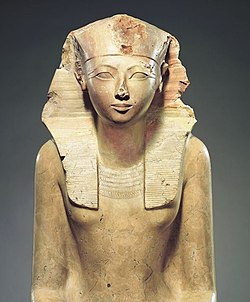
Primer: Why Hatshepsut Still Matters
Hatshepsut archetypes prove themselves through visible competence. You invest in infrastructure, international commerce, and carefully curated symbolism to make continuity feel inevitable. This Q&A brief distills biography, operating system, and modern applications so readers can deploy the archetype with confidence.
Core Pillars
- Spins narrative campaigns that normalize unconventional leadership
- Builds logistics hubs and fleets that expand prosperity
- Balances priestly approval with pragmatic governance
- Champions artisans and knowledge workers
Watchouts
- Requires constant storytelling to quiet detractors
- Major building programs strain budgets
- May depend on a small inner circle for validation
- Risk of avoiding direct confrontation with rivals
Leadership Snapshot
Hatshepsut legitimized her reign with trade convoys, construction booms, and logistics plans carved in stone.
- Born: c. 1507 BCE — Thebes
- Died: 1458 BCE — Thebes
- Dynasty: 18th Dynasty Egypt
- Specialty: Trade diplomacy and monumental branding
Deployment Zones
Use the Hatshepsut archetype when you need:
- Infrastructure leadership
- brand stewardship
- trade policy
- experiential design
- high-visibility program delivery
Signature Timeline & Campaign Pulse
Five anchor moments that prove why Hatshepsut still trends in boardroom decks.
- Becomes co-regent for Thutmose III after Thutmose II dies.
- Takes full pharaonic titles; depicted in male regalia to quiet critics.
- Dispatches famed Punt expedition to secure incense, myrrh, exotic flora.
- Completes obelisks at Karnak and expands Deir el-Bahri terraces.
- Dies; loyal officials hide records as Thutmose III reasserts power.
Battlefield-to-Bureaucracy Playbook
Stack these cards into strategy briefs, leadership workshops, or culture resets.
Campaign Stack
- Spins narrative campaigns that normalize unconventional leadership
- Builds logistics hubs and fleets that expand prosperity
- Balances priestly approval with pragmatic governance
Coalition Stack
- Champions artisans and knowledge workers
- Keeps succession plans and regency politics orderly
Stability Stack
- Counter-risk: Requires constant storytelling to quiet detractors
- Counter-risk: Major building programs strain budgets
- Counter-risk: May depend on a small inner circle for validation
Punt Expedition Logistics
Reliefs show manifests, crew rosters, and cargo (myrrh trees planted back in Egypt). Hatshepsut turned supply chain transparency into propaganda.
Modern PM lesson: publish your KPIs visually so stakeholders feel the win the moment ships dock.
I have made this for him [Amun], a Punt in his house, to give incense for the Divine Nose.
— Deir el-Bahri inscription
Comparative Scorecard
Benchmark Hatshepsut against an operator (Augustus) and a reconciler (Nelson Mandela) to anchor strategic debates.
| Signal | Hatshepsut | Augustus | Nelson Mandela |
|---|---|---|---|
| Signature Play | Turns trade expeditions and obelisks into trust-building signals. | Turns civil turmoil into lasting institutions and codified incentives. | Uses reconciliation and moral authority to reset the rules of engagement. |
| Coalition Style | Elevates scribes, priests, and merchants who document every delivery. | Stitches elites, army, and provinces through calibrated power-sharing and ritual. | Centers empathy, ritual, and accountability to unite rivals. |
| Risk Trigger | Successors may erase branding if they feel overshadowed. | Can drift toward caution, requiring fresh catalysts to avoid stagnation. | Patience can frustrate urgent reformers and invite bad actors if guardrails slip. |
| Cultural Legacy | Masters narrative art, reliefs, and ceremonies to normalize female rule. | Builds civic religion, infrastructure, and law to keep Rome cohesive. | Models forgiveness, civic dignity, and inclusive nation-building. |
| Modern Takeaway | Big claims need receipts—publish manifests, not just myths. | Systems outlive charisma when you reward compliance and deliver calm. | Lead with dignity but protect your own stamina and safety nets. |
Research Toolkit & Further Reading
Blend primary sources, documentaries, and Zinvana explainers for instant topical authority.
-
Museum
Metropolitan Museum Hatshepsut Exhibit
Curated essays on her reign and artifacts.
-
Primary
Karnak Obelisk Inscriptions
Thutmose III/Hatshepsut texts documenting building works.
-
Article
National Geographic: Voyage to Punt
Accessible overview of the expedition.
-
UNESCO
Deir el-Bahri dossier
Architectural details and conservation status.
-
Guide
Zinvana: Hatshepsut Profile
Pair with archetype quiz for logistics leadership.
In-Depth Q&A – Ten Expert Answers
Tap a topic to expand; each badge tells you which strategic lane you are exploring.
What early conditions shaped Hatshepsut's leadership instincts? Origins
Hatshepsut archetypes prove themselves through visible competence. You invest in infrastructure, international commerce, and carefully curated symbolism to make continuity feel inevitable.
How does Hatshepsut keep momentum without losing control? Strategy
Spins narrative campaigns that normalize unconventional leadership Builds logistics hubs and fleets that expand prosperity Balances priestly approval with pragmatic governance
What systems make Hatshepsut's leadership sustainable? Systems
Infrastructure leadership, brand stewardship, trade policy, experiential design, high-visibility program delivery
How does Hatshepsut hold coalitions together? Allies
You value confidants who encourage rest and help you celebrate wins without constant performance.
Where can Hatshepsut's style backfire and how do you counter it? Watchouts
Requires constant storytelling to quiet detractors Major building programs strain budgets May depend on a small inner circle for validation
What tactics from Hatshepsut translate into modern innovation work? Playbook
Reliefs show manifests, crew rosters, and cargo (myrrh trees planted back in Egypt). Hatshepsut turned supply chain transparency into propaganda.
How does Hatshepsut manage morale and narrative? People
Modern PM lesson: publish your KPIs visually so stakeholders feel the win the moment ships dock.
Where does Hatshepsut's archetype create outsized results today? Today
Infrastructure leadership, brand stewardship, trade policy, experiential design, high-visibility program delivery
What myths about Hatshepsut should modern readers drop? Reality
You craft legitimacy through story, architecture, and reliable trade.
What is the immediate leadership lesson from Hatshepsut? Action
Document hard metrics behind the spectacle so even skeptics trust the results.