
Zinvana logo Zinvana
Free forever | Instant results | No sign-up

MBTI Personality Quiz 2025

Answer 16 scenario-based questions to reveal your Myers-Briggs profile. Get strengths, blind spots, and next steps you can use in work and relationships.

16 questions • ~2 minutes
Instant results + deep analysis
No sign-up required

On this page

Use this guide to understand what your four-letter result actually means, how to avoid common mistypes, and how to apply your type in real life.

Note: This quiz is a practical, scenario-based assessment designed for insight and reflection. It is not a clinical diagnosis and does not replace professional psychological assessment.

What each MBTI letter means (plain English)

Your result is built from four preference pairs. Think of them as defaults you lean toward under low pressure—not rigid rules.

⚡ E vs I — Energy & stimulation

This is about where you naturally recharge and what level of stimulation feels sustainable.

  • E: momentum from interaction, variety, and external input
  • I: momentum from focus, depth, and quiet processing time

🔍 S vs N — Information & patterning

This reflects what you trust first: concrete details or big picture patterns.

  • S: facts, practicality, proven methods, what is
  • N: themes, meaning, possibilities, what could be

⚖️ T vs F — Decisions & values

This is about the lens you use first when choosing: objective criteria or human impact.

  • T: fairness through consistency, logic, trade-offs
  • F: fairness through empathy, values, context

🗂️ J vs P — Structure & adaptability

This reflects your comfort with closure versus keeping options open.

  • J: plans, decisions, clarity, finishing
  • P: flexibility, discovery, adjusting as you go
If you score close to the middle on a pair (like E/I), that’s normal. Many people are situational—your “default” can shift depending on role, stress, and environment.

How to read your 4-letter type (and use it)

A four-letter code becomes useful when you turn it into specific behaviors you can notice and improve.

  • Start with the pair you feel most strongly: many people immediately recognize one dimension (often J/P or S/N).
  • Read your type as a pattern, not a label: the combinations interact. For example, INTJ and INFJ may share intensity and future-focus, but differ in decision-making and conflict style.
  • Watch behavior under stress: stress can make you look like your opposite. That doesn’t mean your core preference changed—it often means your coping strategy did.
  • Use your result as a playbook: apply one insight at a time (communication, planning, conflict, energy management) so your type turns into measurable improvement.
Practical tip: Screenshot your result and revisit it in 30 days. The best MBTI insight is the one you actually practice.

Common MBTI mistypes (and how to avoid them)

Most confusion comes from answering based on your “ideal self” or your current job role instead of your natural default.

🎭 Role vs preference

A manager can act like an “E” at work and still be an “I” at home. Answer based on what recharges you.

📈 Skill vs default

You can be highly empathetic and still lean “T,” or highly organized and still lean “P.” Skill ≠ preference.

😵 Stress masking

Burnout can mimic your opposite letters. If your life is in a high-stress season, take the quiz again later for comparison.

  • If you’re stuck between S/N, ask: do you trust what is first (S) or what could be first (N)?
  • If you’re stuck between T/F, ask: in tough decisions, do you default to consistent criteria (T) or individual impact (F)?
  • If you’re stuck between J/P, ask: do you feel relief after closing decisions (J) or after keeping options open (P)?

MBTI at work: meetings, feedback, collaboration

Use MBTI as a communication shortcut. It helps teams reduce friction by clarifying what “good work” looks like to different people.

🧩 Meetings

  • I-types: send an agenda early; allow thinking time
  • E-types: include discussion; end with clear next steps
  • S-types: define facts, constraints, and owners
  • N-types: clarify the “why,” outcomes, and options

🗣️ Feedback

  • T-types: lead with direct specifics and criteria
  • F-types: include impact + appreciation + intent
  • J-types: define deadlines and decisions
  • P-types: co-create options and leave room to adapt

🤝 Collaboration

The fastest teams combine opposites: S keeps reality grounded; N keeps strategy flexible. J drives delivery; P prevents tunnel vision.

Try pairing your result with a contrasting guide like ESTJ vs INFP or ENTP vs ISTJ to see how different defaults solve the same problem.

MBTI in relationships: conflict patterns + repair scripts

Personality types don’t determine compatibility, but they can explain common misunderstandings—especially around communication, planning, and emotional pacing.

🧯 Conflict triggers (common patterns)

  • S vs N: “details” vs “meaning” arguments
  • T vs F: “logic” vs “care” arguments
  • J vs P: “commitment” vs “freedom” arguments

🛠️ Repair scripts (copy/paste)

  • “Help me understand what matters most to you here.”
  • “Here’s the outcome I’m aiming for—what outcome are you aiming for?”
  • “Can we agree on one next step now, then revisit later?”

🧭 Personal growth prompt

Pick one opposite-letter skill to practice this week. Example: J-types practice leaving one decision open; P-types practice closing one decision early.

Overview

Understand the Classic MBTI Framework

The Myers-Briggs Type framework maps four core preference pairs into a concise four-letter profile. This quick test turns your instinctive responses into a practical type report with clear takeaways for work, relationships, and personal growth.

Why this matters: a short, reliable assessment helps you name your natural tendencies, communicate them to others, and build targeted development routines that respect how you prefer to think and act.

Decode Your Cognitive Preferences

Each letter in your MBTI type represents a preference pair. The blend of these four choices describes how you gather energy, absorb data, analyze situations, and bring plans to life.

Energy: Extraversion (E) vs. Introversion (I)
🔍
Information: Sensing (S) vs. Intuition (N)
⚖️
Decisions: Thinking (T) vs. Feeling (F)
🗂️
Lifestyle: Judging (J) vs. Perceiving (P)
How the quiz works
Extraversion badgeEnergy Flow Sensing badgeInformation Style Thinking badgeDecision Lens Judging badgeLifestyle Rhythm

You will make ten instinctive choices. Behind the scenes we tally each preference to reveal your most natural combination and the best-fit MBTI profile.

The Four MBTI Families
Elon Musk — representative example of the Analyst (NT) temperament
Elon MuskVisionary technologist driving long-range innovation.

Strategic, logic-first innovators who love abstract puzzles and future-focused problem solving.
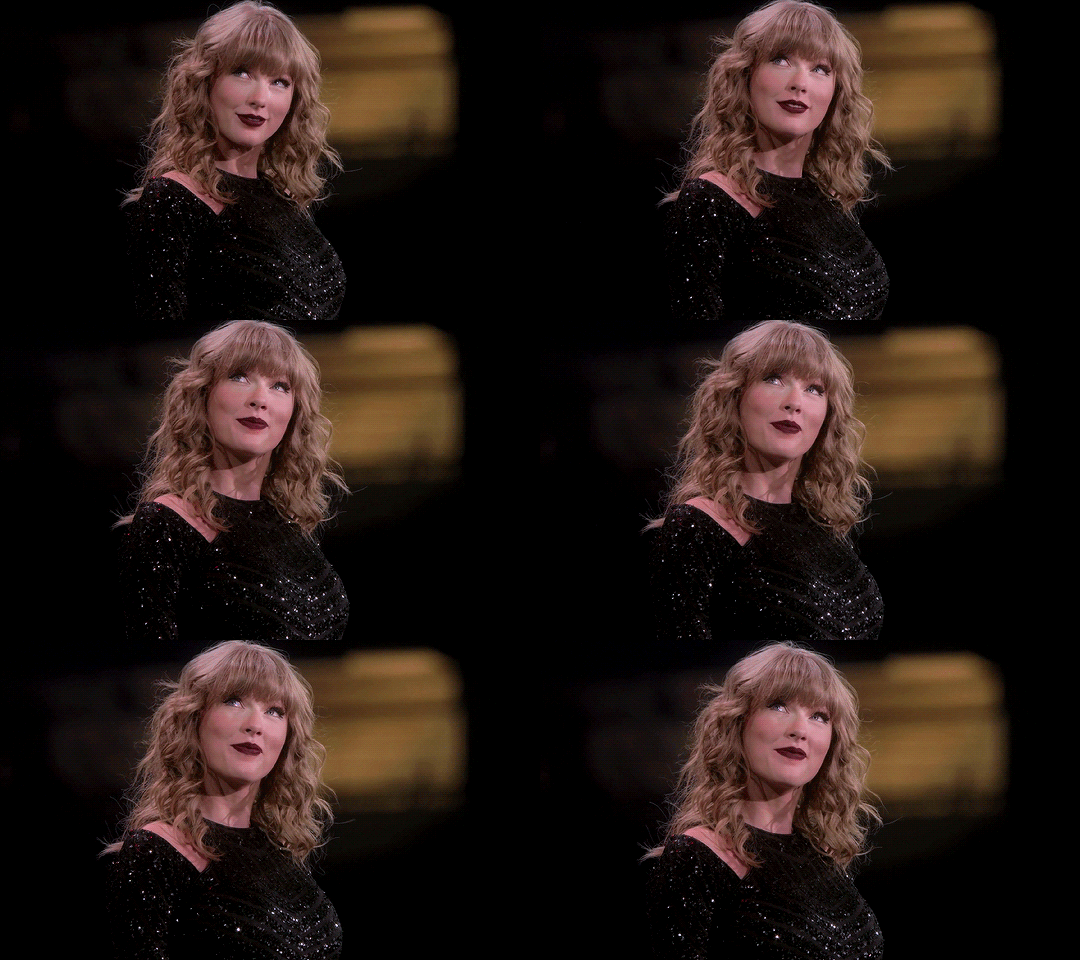
Taylor Swift — representative example of the Diplomat (NF) temperament
Taylor SwiftStorytelling advocate who connects emotions and meaning.

Empathetic visionaries who translate ideals into movement and nurture authentic collaboration.

Selena Gomez — representative example of the Sentinel (SJ) temperament
Selena GomezGrounded organizer who keeps communities cared for.

Practical protectors who steward details, uphold commitments, and create reliable structure for others.

Serena Williams — representative example of the Explorer (SP) temperament
Serena WilliamsFearless competitor who reads the moment and acts fast.

Adaptable realists who respond quickly to opportunities and thrive when they can stay fully present to what is unfolding.

Your result includes a complete strengths profile, common blind spots, career recommendations, and practical coaching prompts to integrate your type.

How to Get Reliable Myers-Briggs Insights

The most useful MBTI results come from honest, in-the-moment answers and a clear plan for what you will do with the data. Use these best practices to keep your score accurate, your reflection grounded, and your growth roadmap actionable.

📊 Research-Driven Scenarios

Each question mirrors the validated dichotomies used by certified MBTI practitioners, so your instinctive choice reveals a consistent preference pattern.

  • Built on 2025 workplace, learning, and relationship examples.
  • Balances cognitive, emotional, and behavioral signals.
  • Removes trick questions so you can answer quickly and honestly.

🧠 Instant Type Breakdown

Your result page unpacks dominant functions, collaboration style, and blind spots so you can translate a four-letter code into practical action.

  • Strengths and watch-outs displayed side-by-side.
  • Career prompts tied to modern hybrid work realities.
  • Relationship guidance written for friends, partners, and teams.

🚀 Built-In Development Plan

Convert insight into momentum with growth advice curated for every type and direct links to deeper guides across Zinvana's MBTI library.

  • Micro-habits to practice over the next 7, 30, and 90 days.
  • Ideas for pairing with complementary personalities.
  • Further reading customized for your dominant temperament.
Tip: Answer the quiz in one focused sitting and choose the option you would pick in a natural, low-pressure situation. This protects against biased responses and keeps your Myers-Briggs profile meaningful.

What to Do After You Discover Your MBTI Type

A personality assessment is only as valuable as the action that follows it. Layer these steps onto your result page to weave MBTI insights into career planning, leadership development, and everyday relationships.

  • Pair your MBTI code with the Big Five or StrengthsFinder for a multifaceted development plan. The overlap highlights stable traits versus situational skills.
  • Build a team map by collecting types from colleagues and plotting preferred communication channels, meeting formats, and decision cadences.
  • Revisit your result quarterly, note new examples that confirm (or challenge) each letter, and adjust your growth prompt into a measurable habit.
  • Explore advanced guides like ENTJ strategic leadership and ENFJ collaboration playbooks to keep the learning curve steep.
Want ongoing coaching? Subscribe to the Zinvana Personality Newsletter for a monthly breakdown of emerging MBTI research, live workshops, and exercises tied to each of the 16 types.

Take the MBTI Personality Quiz

Answer 16 scenario-based questions to uncover your Myers-Briggs code

0% Question 1 / 16
1 / 16

How do you recharge after an intense week?

When you start a new project, what excites you most?

How do you usually make important decisions?

What best describes your work style?

In a lively conversation, you typically...

How do you absorb new information most easily?

During conflict, what do you focus on first?

What is your relationship with schedules?

How do you prefer to communicate complex ideas?

What best describes your outlook on the future?

At a party where you know only a few people, you tend to…

When learning something new, you trust…

If you must choose quickly, you usually…

How do you handle a to-do list with many tasks?

In a group project, your default role is…

When someone breaks a rule, your first instinct is…

Reference

Complete MBTI Type Guide 2025

Browse quick-reference summaries for every Myers-Briggs personality type. Filter by temperament or search for traits that feel like you.

🔎
Elon Musk portrait representing the INTJ personality type

INTJ • The Architect

Future-oriented strategist who builds precise systems and trusts data over hype.

Elon MuskSystems visionary • CEO of Tesla & SpaceX
  • Long-range planner
  • Independent thinker
  • High standards
Read full profile
Bill Gates portrait representing the INTP personality type

INTP • The Logician

Curious problem-solver who dissects concepts to understand how and why they work.

Bill GatesAnalytical technologist • Co-founder of Microsoft
  • Conceptual depth
  • Flexible analysis
  • Independent learning
Read full profile
Jeff Bezos portrait representing the ENTJ personality type

ENTJ • The Commander

Direct, assertive leader who mobilizes people and resources toward ambitious goals.

Jeff BezosDecisive strategist • Founder of Amazon
  • Strategic organizer
  • Goal focused
  • Influential presence
Read full profile
Ryan Reynolds portrait representing the ENTP personality type

ENTP • The Debater

Energetic innovator who plays with ideas, bending rules to expose better solutions.

Ryan ReynoldsQuick-witted creator • Actor & entrepreneur
  • Quick ideation
  • Charming challenger
  • Adaptive strategist
Read full profile
Taylor Swift portrait representing the INFJ personality type

INFJ • The Advocate

Purpose-driven idealist who reads between the lines and guides others quietly.

Taylor SwiftStory-driven advocate • Global recording artist
  • Deep empathy
  • Visionary mentoring
  • Value-centered
Read full profile
Zendaya portrait representing the INFP personality type

INFP • The Mediator

Imaginative empath who champions authenticity and helps others uncover meaning.
ZendayaEmpathetic storyteller • Actor & producer
  • Heart-led creativity
  • Idealistic values
  • Gentle persistence
Read full profile
Barack Obama portrait representing the ENFJ personality type

ENFJ • The Protagonist

Charismatic coach who unites teams, spots potential, and sparks collective progress.

Barack ObamaInspirational leader • 44th U.S. President
  • Natural motivator
  • Relationship builder
  • Vision with heart
Read full profile
Will Smith portrait representing the ENFP personality type

ENFP • The Campaigner

Spirited connector who inspires possibility, storytelling, and wholehearted living.
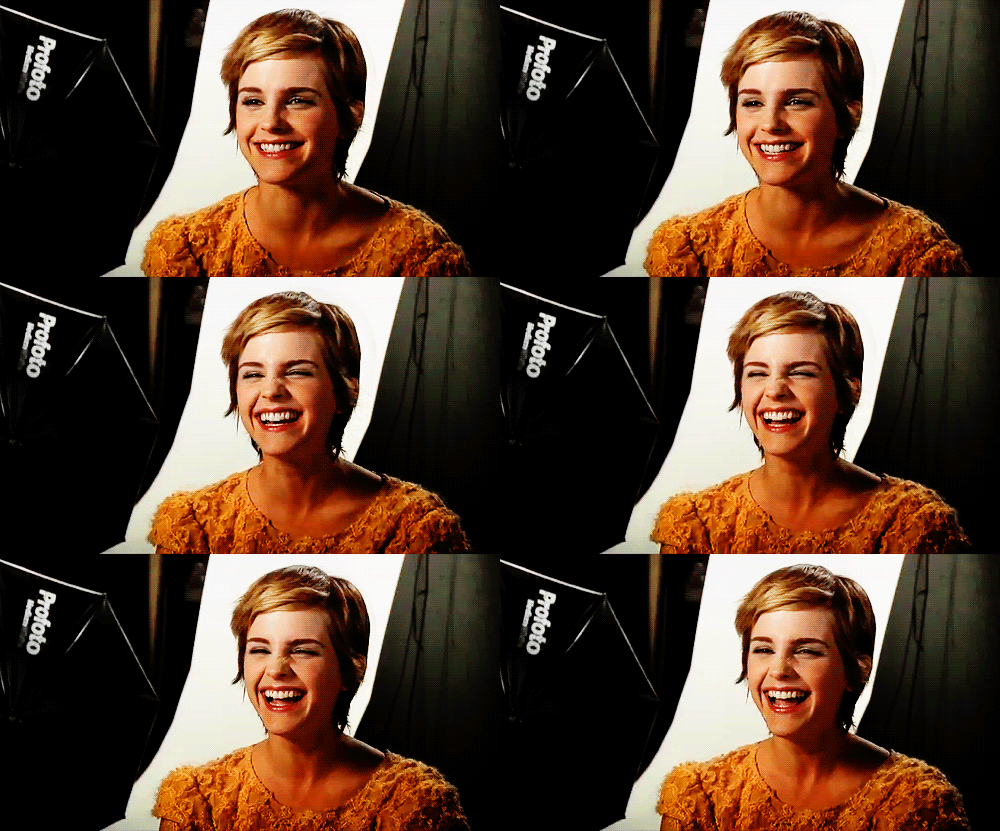
Will SmithCharismatic storyteller • Actor & producer
  • Creative enthusiasm
  • People-centric
  • Adaptive optimism
Read full profile
Emma Watson portrait representing the ISTJ personality type

ISTJ • The Logistician

Dependable executor who honors commitments, procedures, and steady progress.

Emma WatsonPrincipled organizer • Actor & UN Women ambassador
  • Detail attentive
  • Process driven
  • Practical loyalty
Read full profile
Selena Gomez portrait representing the ISFJ personality type

ISFJ • The Defender

Warm guardian who protects traditions and creates practical comfort for others.

Selena GomezCompassionate builder • Singer & producer
  • Steadfast care
  • Quiet diligence
  • Service mindset
Read full profile
Dwayne Johnson portrait representing the ESTJ personality type

ESTJ • The Executive

Commanding coordinator who builds structures, policies, and efficient execution.
Dwayne JohnsonAction-oriented leader • Actor & entrepreneur
  • Operational clarity
  • Direct leadership
  • High accountability
Read full profile
Jennifer Lopez portrait representing the ESFJ personality type

ESFJ • The Consul

Community-focused caretaker who creates belonging through dependable support.

Jennifer LopezCommunity-focused star • Performer & producer
  • Hospitality expert
  • Social memory
  • Organized compassion
Read full profile
Keanu Reeves portrait representing the ISTP personality type

ISTP • The Virtuoso

Calm troubleshooter who dissects systems and solves issues in real time.

Keanu ReevesCalm problem-solver • Actor & stunt creative
  • Hands-on precision
  • Independent problem solving
  • Cool under pressure
Read full profile
Billie Eilish portrait representing the ISFP personality type

ISFP • The Adventurer

Quiet creative who expresses values through aesthetics, experiences, and empathy.

Billie EilishArtistic innovator • Singer-songwriter
  • Artful presence
  • Flexible lifestyle
  • Compassionate action
Read full profile
Serena Williams portrait representing the ESTP personality type

ESTP • The Dynamo

Bold tactician who spots openings, negotiates on the fly, and thrives in action.

Serena WilliamsCompetitive powerhouse • Tennis icon
  • Fast-paced agility
  • Persuasive charm
  • Real-time strategist
Read full profile
Harry Styles portrait representing the ESFP personality type

ESFP • The Entertainer

Vibrant experience-maker who lights up a room and celebrates the present moment.

Harry StylesElectric performer • Singer & fashion icon
  • Magnetic warmth
  • Resourceful spontaneity
  • People-first focus
Read full profile

Frequently Asked Questions

Your most common questions about the Myers-Briggs® framework and how this quiz interprets your answers.

What is the MBTI personality quiz measuring? +
This assessment measures your preference on the four classic MBTI dichotomies: where you direct energy (Extraversion vs. Introversion), how you gather information (Sensing vs. Intuition), how you decide (Thinking vs. Feeling), and how you structure life (Judging vs. Perceiving). Your answers produce a four-letter code that reflects the combination you lean toward most strongly.
How accurate is this online MBTI quiz? +
The quiz is designed using validated MBTI question patterns, updated for modern scenarios. While no online quiz replaces a certified assessment, most users find the results highly reflective of their natural preferences. Use the insights as a starting point for self-awareness and development.
Can my MBTI type change over time? +
Your core preferences are generally steady, but how you express them can evolve with experience, environment, and intentional growth. Retaking the quiz during different life stages can highlight how you flex into less dominant letters and integrate more balanced skills.
Is one Myers-Briggs type better than another? +
No type is superior. Each MBTI profile excels in specific contexts and faces predictable blind spots. The goal is to understand your natural operating system so you can leverage strengths, partner intentionally, and stretch into complementary skills when needed.
How should I use my MBTI results? +
Start by reflecting on the strengths, growth areas, and coaching prompts in your report. Share results with teammates or loved ones to open conversations about collaboration styles. Apply the insights to career planning, communication habits, and personal development routines.
Is this the official Myers-Briggs® assessment? +
No. This is an educational, scenario-based quiz inspired by the classic MBTI preference pairs. It is designed for quick insight and reflection. Official MBTI certification and assessment processes follow specific instruments and guidelines.
What if I feel like I’m “in the middle” on some letters? +
That’s common. Many people are near the midpoint on one or more pairs (for example, E/I). In that case, focus on the descriptions and real-life patterns in your result rather than the letter alone. Retake the quiz during a calmer week and compare.
How can I use MBTI without boxing myself in? +
Treat your type as a starting hypothesis: a quick summary of what you prefer by default. Use it to improve communication and self-awareness, then practice skills from the opposite letters when your goals require it.

Share Your MBTI Type!

Discovered whether you are an INFJ, ESTP, or somewhere in between? Compare results with friends, teammates, or your community to see how your personalities complement each other.